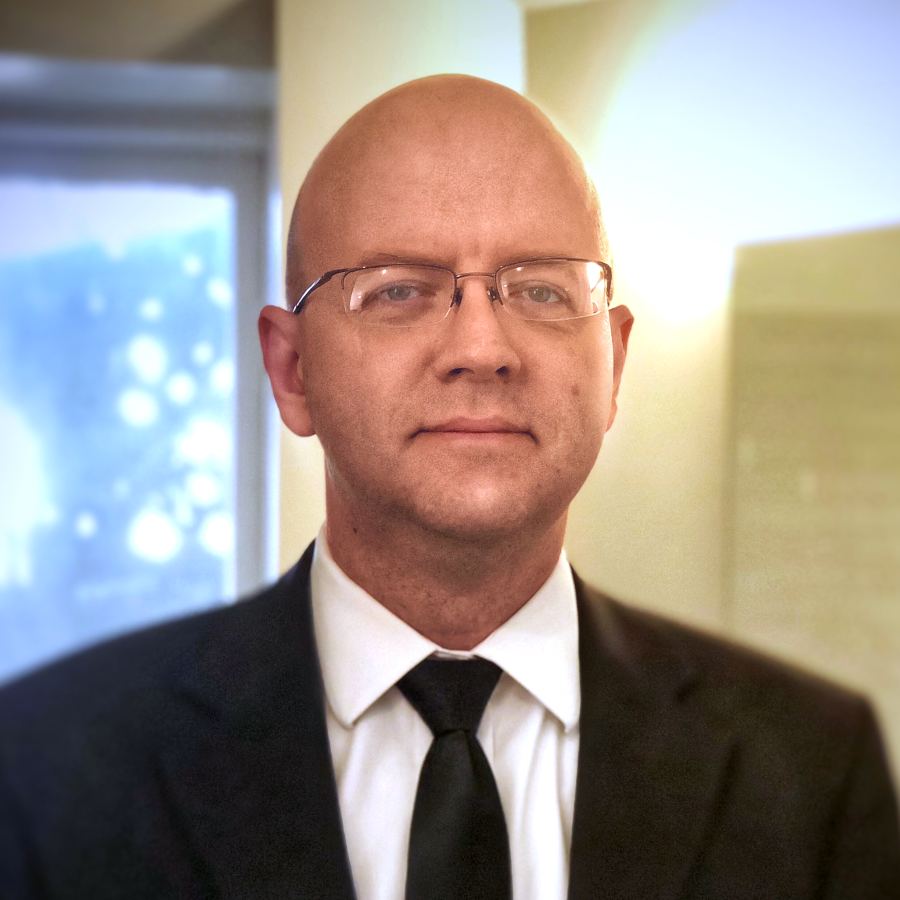
I'm an astronomer at the
University of Texas. My adventure in astronomy has
been a little unconventional.
Currently, I collaborate with Dr. Bart Wakker of
the University of Wisconsin in
researching the Galactic High
Velocity Clouds. This is part of the work for which I received my Ph.D. in
April 2013.
Previously, I worked with Prof. John Kormendy on the secular
evolution of galaxies. We published two
papers on
that subject.
I did my astronomy master's work at UT in the Interstellar
Medium (ISM) group under the supervision of Prof. John Lacy, involving
high resolution, mid-infrared molecular spectroscopy with the Texas
Echelon Cross Echelle Spectrometer (TEXES) instrument on the Gemini
North telescope in Hawai'i. That got
published, too.
As part of my
studies with Dr. Lacy, I worked on the assembly and testing of the Echelon Cross
Echelle Spectrometer (EXES), a 1st generation facility instrument for
the Stratospheric Observatory For
Infrared Astronomy (SOFIA). I also participated in outreach with the
EXES
Teachers' Program.
In a previous life, I was
employed as a 3.5m Telescope Observing Specialist (2001-5) for the Astrophysical Research
Consortium (ARC). During that time, I was the APO liaison for the
fabrication and testing of the Near-Infrared
Camera/Fabry-Perot Spectrometer (NIC-FPS), a 3.5m facility
instrument, at the University of Colorado.
In 2004-06, I was an Observer for the
Sloan Digital Sky Survey (SDSS) at Apache Point Observatory in Sunspot,
NM. SDSS is one of the most successful and scientifically productive
projects in the history of astronomy. There are now over 4000 refereed
papers with 'SDSS' or 'Sloan Survey' in their abstract or title. To
astronomical accuracy, that's about 1 paper per day since the telescope
saw first light in 1998. These papers have been cited over 150,000
times. I'm a co-author on a
few of them.
In an even earlier previous life, I
completed a master's degree in physics at Colorado State University in 2002.
My thesis project, supervised by Prof. Roger Culver, involved evaluating a
0.5-meter telescope for doing high-precision photometry studies of
extrasolar planet transits for the Global
Network of Automated Telescopes (GNAT).
(Results: not
good for the telescope.)
I have assisted with the instruction of undergraduate
astronomy and physics courses over 10+ years at CSU and UT, spanning the
range from the non-major introductory level to upper-division majors'
courses. In addition, I was the instructor of record for observational
astronomy laboratories at both
institutions.
Like many in this business, I started out life as an
amateur astronomer. I previously belonged to amateur clubs in Phoenix and Tucson,
and even started one of my own in high school. During college, I led
tours at Kitt Peak National
Observatory and ran public observing nights at Flandrau Planetarium. Committment to
outreach remains important to me.

Education
h-index: 34 (November 2012)
Presentations

The asteroid (14505)
Barentine is named after me.
In addition to science, I'm
interested in the (pre)history of astronomy. One of those adventures led
to my fifteen minutes of fame.
"A
Possible Rock Art Depiction Of The A.D. 1006 Supernova Event In The
American Southwest" (208th AAS Meeting, Calgary, AB, June 2006) (PDF)
"Ancient
Rock Art Depicts Exploding Star"
(SPACE.com, 5 June 2006)
"Petroglyph
may have recorded supernova" (USA Today, 6 June 2006)
"Did
Ancient Americans Record a Supernova? (Sky & Telescope, 7 June
2006)
I tweet about science, public
policy, politics, government, and law. Follow me at @JohnBarentine on the
Twitter.